The Sound of Authority
The third in our PowerVox series on the hidden power of the human voice.
In the first post we explored the pitch of the voice — and the startling link between how a CEO sounds and how much they earn. In the second, we looked at why women can't simply solve the problem by sounding more like men.
This third post goes deeper still. Because the bias runs deeper than most of us realise — and that is exactly where the most interesting questions live.
The research points to something profound:
People preferred lower-pitched leaders even in roles they already associated with women.
That suggests the bias isn't primarily about who we think should lead.
It's about what leadership sounds like.
The Voice Bias Nobody Talks About
What if some of our assumptions about leadership aren't visible at all?
When organisations talk about bias, they usually focus on what we can see.
Gender. Race. Age. Disability. Appearance.
We have become increasingly aware that visual cues influence how people are judged at work.
But what if some of our deepest biases arrive through our ears rather than our eyes?
What if leadership has a sound?
And what if most of us have absorbed it without ever realising?
A Curious Experiment
In 2012, researchers Rindy Anderson and Casey Klofstad explored a fascinating question.
Earlier work had already shown that people tend to prefer leaders with lower-pitched voices.
That finding was perhaps unsurprising in traditionally male leadership environments such as politics or business.
But the researchers wanted to test something more specific.
What happens when the leadership role is one traditionally associated with women?
Would the preference disappear?
Would people choose a different type of voice?
The answer was no.
The preference remained.
Participants still preferred leaders with lower-pitched voices, even when evaluating roles such as school board member and president of a parent-teacher association.
The effect was remarkably consistent.
Male listeners showed it. Female listeners showed it. The gender of the role made little difference.
The preference persisted.
That Should Make Us Uncomfortable
Because this finding challenges a comforting explanation.
It would be easy to assume that leadership voice bias exists because historically men occupied positions of power.
The argument goes something like this:
"People expect male leaders, therefore they prefer male-sounding voices."
There is certainly some truth in that.
But this study suggests something more complicated may be happening.
The bias remained even when people were considering roles where women have traditionally held significant influence.
In other words, people weren't simply responding to the gender of the leader.
They were responding to the sound of authority itself.
And those are very different things.
The Hidden Leadership Template
Every one of us carries mental templates.
What a doctor looks like.
What a teacher sounds like.
What a leader feels like.
Most of these templates operate beneath conscious awareness.
We don't choose them. We absorb them.
Through culture. Through media. Through experience. Through thousands of interactions accumulated across a lifetime.
The problem is that once a template becomes embedded, it starts influencing decisions without our permission.
We begin mistaking familiarity for capability.
|
We mistake familiarity for capability. Comfort for competence. Expectation for evidence. |
A voice sounds authoritative.
Therefore the speaker must be authoritative.
The logic feels instantaneous.
And often invisible.
Comedian and former consultant N. Shackleton-Jones captures this perfectly. Watch how the sound of seniority lets a completely empty word carry an entire room:
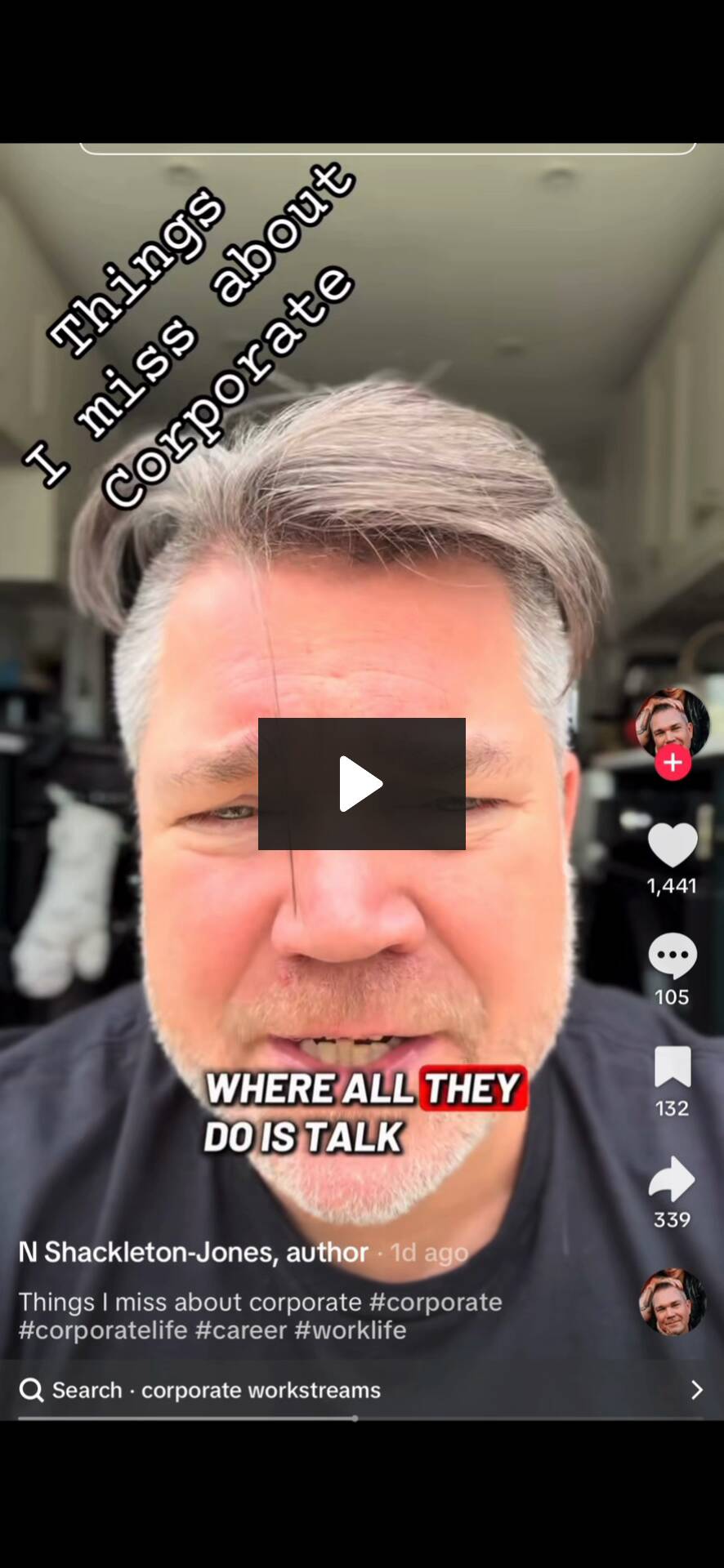
Video: @shackletonjones
Notice what's actually happening. The word means nothing — "extraordinary," then "agile," then whatever comes next. But the authority is real, because the authority was never in the words. It was in who got to say them, and how. That's the bias we're talking about — and we laugh because we recognise it.
Why This Matters
Imagine two leaders delivering exactly the same message.
Same ideas. Same expertise. Same judgement. Same integrity.
Only one thing differs.
The sound of their voice.
If listeners unconsciously perceive one leader as more authoritative before a single argument has been made, then the playing field is not level.
Not because anyone intends harm. Not because anyone is consciously discriminating.
But because human beings are pattern-recognition machines.
And sometimes the patterns we inherit stop serving us.
This is where conversations about communication become more interesting than conversations about confidence.
Because confidence assumes the problem sits with the speaker.
Bias often sits with the listener.
The Endless Coaching Loop
Many leadership development programmes still respond to this challenge in the same way.
They focus on changing the individual.
Speak differently. Sound stronger. Project more authority. Lower your voice. Slow your pace. Take up more space.
Sometimes those techniques can be useful.
But they raise an important question.
If a system consistently rewards a narrow range of vocal characteristics, should our first response always be to help people adapt?
Or should we also examine the assumptions driving the reward?
Because there is a difference between developing communication skill and teaching conformity.
One expands human potential.
The other narrows it.
The Organisational Blind Spot
Most organisations have become reasonably sophisticated at recognising visual bias.
They monitor hiring decisions. Promotion outcomes. Pay gaps. Representation.
Yet almost none examine how communication is evaluated.
Very few organisations ask questions such as:
|
QUESTIONS ORGANISATIONS RARELY ASK What do we actually mean by "gravitas"? What do we mean by "executive presence"? How do we distinguish confidence from competence? What vocal characteristics are we unconsciously rewarding? What communication styles are we overlooking? |
These questions matter because many leadership decisions are made in conversations, meetings, presentations and talent reviews.
In other words, they are made through voice.
Beyond Sounding Like a Leader
At PowerVox, this is one of the reasons we focus on Voice Intelligence rather than vocal performance.
The goal is not to help everyone sound the same.
The goal is not to create a single leadership voice.
The goal is to understand how communication works. How perception works. How influence works. And how bias works.
Because the most powerful communication strategy is not becoming a copy of somebody else's leadership style.
It is developing the awareness, range and adaptability to use your own voice intentionally.
The Bigger Question
Perhaps the most important lesson from this study is not about pitch at all.
It is about awareness.
If we can be influenced by the sound of a voice even in roles where gender expectations should be different, what other assumptions are shaping our decisions without our knowledge?
And if leadership can be biased through sound as well as sight, perhaps organisations need to start listening more carefully.
Not just to what people say.
But to how we respond when they say it.
Because the most powerful biases are rarely the ones we can see.
They're the ones we hear without noticing.
The future diversity conversation is not just about who gets a seat at the table. It's also about which voices are recognised, rewarded and believed once they're there.
Most organisations are looking at visual diversity. Very few are examining auditory bias.
Here at PowerVox, we're going deeper — because that's where the treasure lies.
Research Reference
Anderson, R.C. & Klofstad, C.A. (2012). Preference for Leaders with Masculine Voices Holds in the Case of Feminine Leadership Roles. PLoS ONE, 7(12), e51216.
We hope you've enjoyed this blog post. If you're interested in working with PowerVox you can email us [email protected]. Learn more about The Greenhouse at https://www.powervox.co.uk/the-greenhouse. To find out more about PowerVox Play Sessions, visit https://www.powervox.co.uk/studio-play. You can also follow us on social media, using the handles at the footer of our website.