
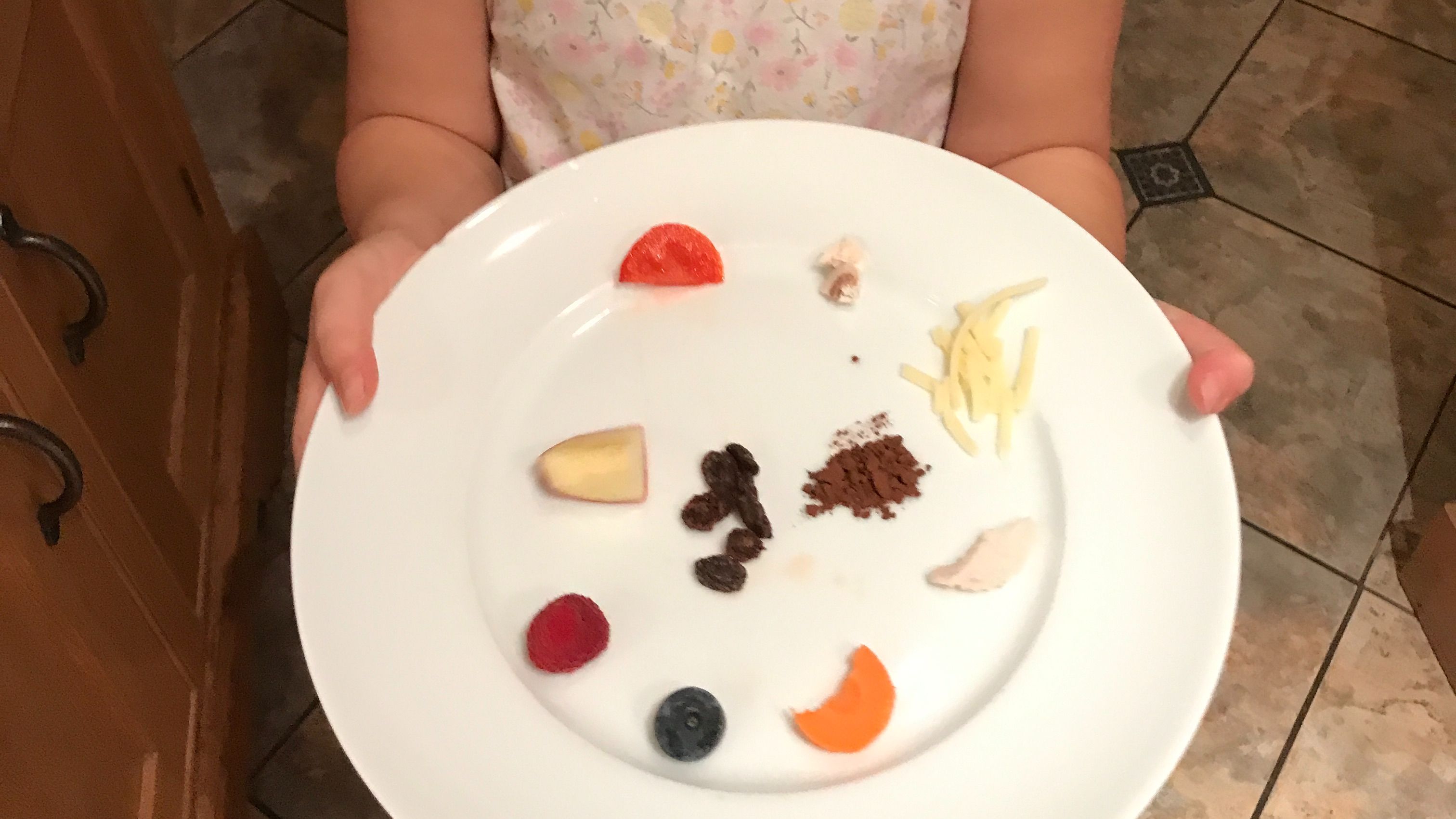
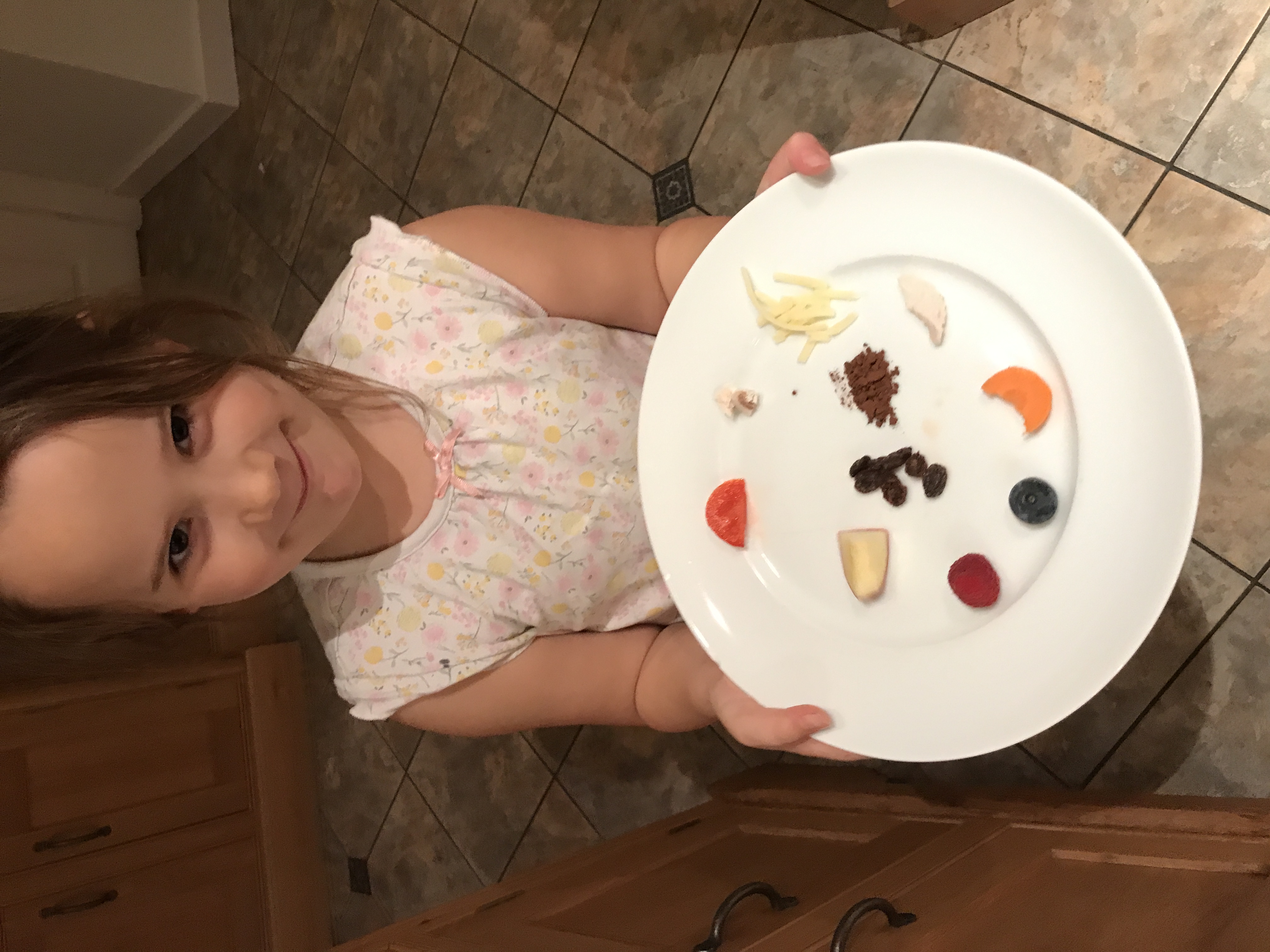
Taste Test
One of the Play Sessions we do is called "Taste Test" — it looks like a party game, but it's actually a masterclass in attention, vulnerability and perception.
And it contains quite a few overlapping PowerVox themes.
The first lesson: we stop noticing what we already know
Most people think they know what ketchup tastes like.
Or cheddar. Or marmite. Or lemon juice.
But when you remove the label, the packaging, the colour and the expectation, something fascinating happens. You suddenly have to pay attention again.
You move from: "I know what this is." to: "What is this?"
That's a completely different cognitive state.
Curiosity replaces certainty.
One of the biggest barriers to good communication is that we stop listening because we think we already know. Often, we're just waiting for a gap so we can speak about what we know.
The taste test exposes how often we rely on assumptions.
The second lesson: uncertainty is uncomfortable
Watch adults play blind taste tests.
Within seconds they'll start saying things like:
"I know this..." "Wait... No..." "I think... but maybe not."
The moment certainty disappears, discomfort appears.
That's a really interesting parallel to voice.
Many people stay silent not because they have nothing to contribute but because they aren't 100% certain. Yet leadership rarely operates in certainty. Leadership operates in:
"I think..." "My current assessment is..." "Based on what I know..."
The taste test is a safe way to experience uncertainty without catastrophe. (Although granted, if you hate marmite, you won't enjoy that one.)
The third lesson: perception is constructed
A blindfold is a wonderful thing.
Because suddenly your brain loses one of its favourite shortcuts.
Visual information.
Without sight, people often identify foods incorrectly.
The brain starts guessing. Creating stories. Filling gaps.
Again, this has enormous relevance to communication.
Humans don't experience reality directly.
We interpret it, and we infer, and we fill in the blanks.
We love to make up stories (in our head) and construct narratives.
That's true in a boardroom as much as it is with a forkful of pineapple.
The fourth lesson: vulnerability creates connection
There's something inherently funny about sitting blindfolded while a friend feeds you mystery substances.
You look ridiculous. You surrender control. You trust someone else.
And laughter emerges.
Why?
Because vulnerability often creates intimacy.
Not the heavy, confessional kind. The playful kind. The kind that says:
"It's safe to be imperfect here. To get butter down my chin or whipped cream on my nose."
Many of the strongest relationships contain this ingredient as core to the recipe of trust.
The fifth lesson: attention amplifies experience
When was the last time you truly tasted a raisin? Or a strawberry? Or a cube of cheese?
Most of us eat while:
- scrolling
- working
- driving
- watching television
The taste test forces presence — flavour becomes an event.
The ordinary taste of butter, or bread, becomes interesting.
And that might be one of the deepest themes running through why we invite leaders to do our Play Missions.
The activities aren't creating joy from nothing. They're helping people notice the joy that was already available. Right under their nose. If they weren't so busy being serious and doing very important work. The irony is that the important work is of a higher quality once the human taps into creativity, calm and a more relaxed state. So yeah. Taste Test for the win.
The sixth lesson: being wrong can be fun
This may be our favourite reason to do this task.
Adults become very attached to being right.
Especially capable adults... successful adults... and people whose professional lives depend upon good judgement.
Children don't care nearly as much.
They happily guess, experiment and fail.
They laugh as they fall off the log, and they get back on again.
The taste test gently reminds us as adults that being wrong doesn't have to threaten our identity.
Sometimes it's just funny. That's an incredibly useful lesson for anyone trying to develop confidence.
Confidence isn't: "I am always right."
Confidence is: "I'll survive being wrong."
Gift of uncertainty
Play may be one of the safest ways to practise uncertainty.
And so there's a question we like to ask our leaders:
Which was more uncomfortable:
Not knowing the answer?
Or saying your answer out loud when you weren't sure?
Because for many people, that's the exact place where voice gets stuck.
The taste test just disguises the lesson with pineapple and Marmite. 😊
Who knew that the best learning can sneak in whilst wearing a blindfold?
We hope you've enjoyed this blog post. If you're interested in working with PowerVox you can email us [email protected]. Learn more about The Greenhouse at https://www.powervox.co.uk/the-greenhouse. To find out more about PowerVox Play Sessions, visit https://www.powervox.co.uk/studio-play. You can also follow us on social media, using the handles at the footer of our website.